If you are exploring government contracting, one of the most important things to understand is that not all contracts are the same. There are three main levels you can work with: federal, state, and local government contracts.
Each level has its own rules, competition, contract sizes, and opportunities. Knowing the difference helps you choose the right path, avoid wasted effort, and win contracts faster.
In this guide, we will break down federal vs state vs local government contracts in a clear and practical way so you can decide where to start and how to grow.
Understanding the Three Levels of Government Contracts
Government contracts are divided into three main categories:
- Federal government contracts
- State government contracts
- Local government contracts
Each level represents a different layer of government and a different type of opportunity. The biggest mistake beginners make is treating them all the same.
What Are Federal Government Contracts?
Federal government contracts come from national agencies that operate across the entire country. These are large organizations with big budgets and complex needs.
Examples of Federal Agencies
- Department of Defense
- Department of Health and Human Services
- General Services Administration
These agencies manage large-scale projects that often impact the whole country.
Key Features of Federal Contracts
Federal contracts are known for being:
- High-value projects with larger budgets
- Highly competitive with many applicants
- Strict in requirements and compliance
You will often need detailed proposals, certifications, and strong past performance to compete.
Where to Find Federal Contract Opportunities
Most federal contracts are listed on SAM.gov. This is the main platform for federal procurement.
Who Should Go After Federal Contracts
Federal contracts are best suited for:
- Established businesses
- Companies with proven experience
- Contractors ready for complex projects
They offer big rewards, but they also require preparation and patience.
What Are State Government Contracts?
State government contracts are managed by individual states. Each state has its own system, budget, and procurement process.
Examples of State-Level Projects
- Road construction and transportation
- Public health programs
- University services and maintenance
State contracts often support regional needs rather than national ones.
Key Features of State Contracts
State contracts are typically:
- Medium-sized in value
- Less complex than federal contracts
- More accessible for growing businesses
The process is still structured, but usually easier to navigate than federal systems.
Where to Find State Contracts
Each state has its own procurement portal where opportunities are posted. You will need to register with the state you want to work in.
Who Should Go After State Contracts
State contracts are ideal for:
- Small to mid-sized businesses
- Companies with some experience
- Contractors looking to scale
They are often the best step after gaining initial experience.
What Are Local Government Contracts?
Local government contracts come from cities, counties, and municipalities. These are the closest to everyday community needs.
Examples of Local Projects
- Road repairs and maintenance
- School services and supplies
- Cleaning and facility management
These contracts are usually smaller but easier to access.
Key Features of Local Contracts
Local contracts are known for being:
- Lower in value but easier to win
- Faster in decision-making
- Less competitive
They often involve simpler requirements and shorter timelines.
Where to Find Local Contracts
Local opportunities can be found on:
- City and county websites
- Local procurement portals
- Community and vendor boards
Some opportunities may also come through direct outreach or networking.
Who Should Go After Local Contracts
Local contracts are perfect for:
- New businesses
- Small service-based companies
- Contractors building their first experience
They are the easiest entry point into government contracting.
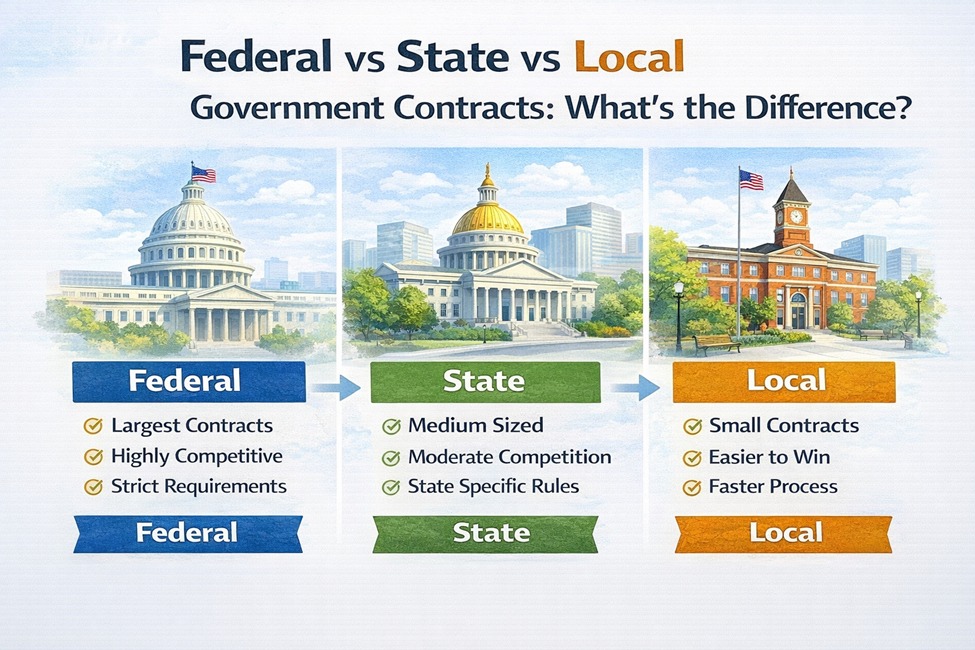
Federal vs State vs Local Government Contracts: Key Differences
Understanding the differences helps you choose the right strategy.
Contract Size
- Federal contracts are the largest
- State contracts are medium-sized
- Local contracts are smaller
Competition Level
- Federal contracts are highly competitive
- State contracts are moderately competitive
- Local contracts have less competition
Complexity
- Federal contracts require strict compliance and detailed proposals
- State contracts have moderate requirements
- Local contracts are simpler and more direct
Speed of Awards
- Federal contracts can take months
- State contracts move faster
- Local contracts are often awarded quickly
Ease of Entry
- Federal contracts are harder to enter
- State contracts are more accessible
- Local contracts are the easiest starting point
How to Choose the Right Government Contracts for Your Business
Choosing the right level depends on your current stage.
If You Are a Beginner
Start with local government contracts. They are easier to win and help you build past performance.
If You Have Some Experience
Move into state government contracts. They offer better value and help you grow your business.
If You Are Established
Target federal government contracts. They provide the largest opportunities and long-term growth.
A Smarter Strategy for Winning Government Contracts
Many businesses go straight to federal contracts and struggle. A better approach is to build step by step.
Start small and grow over time:
- Win local contracts first
- Use them as proof of experience
- Move into state contracts
- Then compete for federal contracts
This approach increases your chances of success and builds confidence.
Why Understanding This Difference Matters
If you understand federal vs state vs local government contracts, you can:
- Focus your time on the right opportunities
- Avoid unnecessary competition
- Build a clear growth path
- Increase your chances of winning contracts
Instead of guessing, you are making informed decisions.
Conclusion
Federal, state, and local government contracts are not just different in size. They are different in strategy, competition, and accessibility.
The key is not to chase the biggest contract right away. It is to start where you can win, build experience, and move up step by step.
The businesses that succeed in government contracting are not always the biggest. They are the ones who understand the system and use it to their advantage.