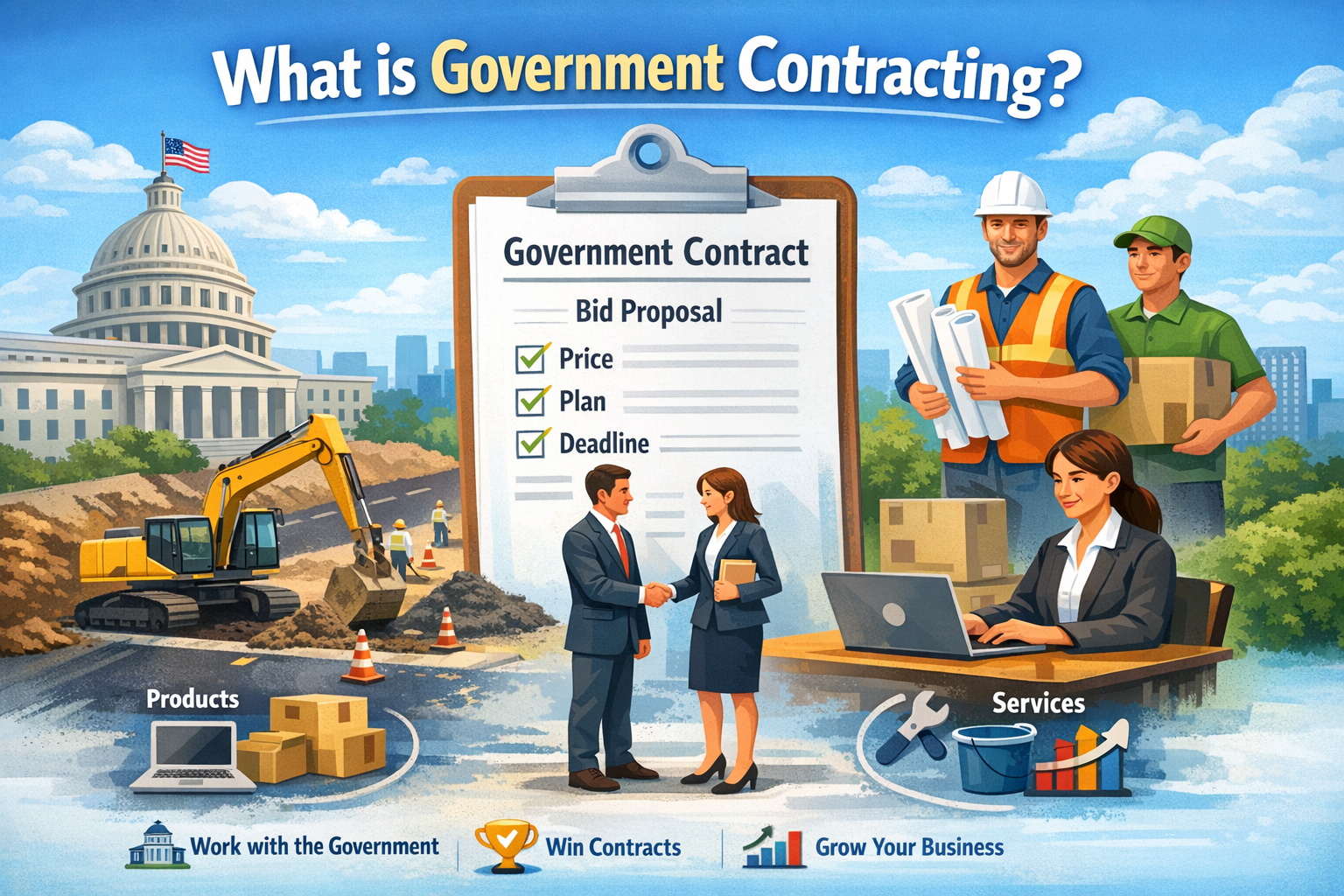

Entering the world of government contracting can be both a lucrative and complex journey for businesses. With trillions of dollars spent annually by federal agencies on goods and services, opportunities abound — but so do the rules, regulations, and red tape. For beginners, navigating this landscape can feel overwhelming. This guide breaks down the basics to help you get started with confidence.
Why Government Contracting?
The U.S. federal government is the largest buyer of goods and services in the world. From office supplies and construction to IT services and logistics, agencies depend heavily on private contractors. For small businesses, especially those that are minority-, veteran-, or women-owned, government contracts can provide stable revenue and long-term growth.
Step 1: Understand the Basics of Federal Procurement
Federal procurement refers to the process through which the government acquires products and services from the private sector. The main principles guiding this process include:
- Fair competition
- Transparency
- Best value for taxpayers
Key legislation, such as the Federal Acquisition Regulation (FAR), governs how contracts are solicited, awarded, and managed.
Step 2: Get Registered
Before you can bid on any federal contract, your business must be registered in the System for Award Management (SAM.gov). Registration is free and includes:
- Obtaining a Unique Entity ID (UEI)
- Completing core business details
- Listing NAICS codes (to define what your business offers)
Once registered, your business becomes visible to government buyers.
Step 3: Know Your Market
Not every government agency buys the same things. Do your homework by exploring:
- USAspending.gov – See who’s spending what, where, and on whom.
- SAM.gov – Browse current opportunities.
- Agency Forecasts – Many agencies publish procurement forecasts to help businesses prepare for upcoming bids.
This research will help you target the right agencies and tailor your offerings.
Step 4: Explore Set-Asides and Certifications
To promote diversity and economic growth, the federal government sets aside a percentage of contracts for specific groups, such as:
- Small Businesses (SB)
- Women-Owned Small Businesses (WOSB)
- Veteran-Owned Small Businesses (VOSB)
- HUBZone Businesses
Getting certified can give you a competitive edge and open access to exclusive opportunities.
Step 5: Start Small with Subcontracting
Jumping directly into prime contracting can be tough for beginners. Instead, consider:
- Subcontracting with larger companies
- Partnering through a mentor-protégé program
- Responding to simplified acquisitions (typically under $250,000)
These paths allow you to build past performance and relationships before taking on bigger contracts.
Step 6: Learn the Language and Stay Compliant
The government contracting world is full of acronyms, forms, and compliance requirements. It’s essential to understand:
- Proposal writing (following the Statement of Work and Evaluation Criteria)
- Invoicing and payment systems (like WAWF)
- Performance metrics and audits
Free training resources like the SBA, PTACs (now APEX Accelerators), and GSA can be invaluable as you build your knowledge.
Conclusion
Government contracting offers significant opportunities, but it also requires patience, preparation, and persistence. By understanding the fundamentals, registering correctly, and strategically targeting the right opportunities, even small businesses can find their place in the federal marketplace.
With the right approach, the path to securing your first contract may be closer than you think.