If you’re a small business trying to sell to the federal government, you’ve probably heard the terms GSA MAS (Multiple Award Schedule) and Open Market tossed around. Maybe you’ve even dabbled in both. But if you’re serious about growing your government sales, understanding the difference and the edge MAS gives you is critical.
Here’s the truth: Small businesses win bigger, more often, and with less friction when they’re on a GSA Schedule. Here’s why.
What’s the Difference?
Let’s break it down:
- Open Market means selling to the government without being on any contract vehicle. You pitch your offer directly to the agency, and they buy it if it’s under the micropurchase threshold or if they jump through hoops to justify the buy.
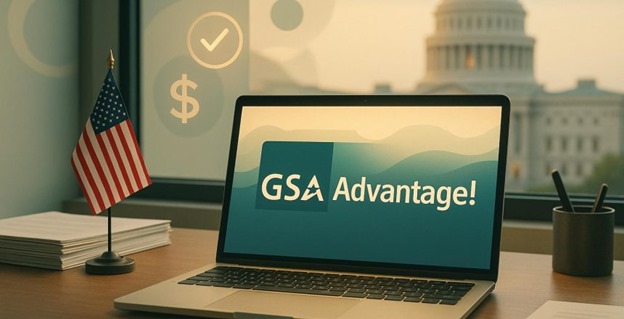
- GSA MAS means your products or services are pre-approved, pre-negotiated, and listed on GSA Advantage. Federal buyers can purchase from you without all the red tape.
To put it simply: Open Market is a hustle. MAS is leverage.
1. Less Red Tape for Buyers = More Sales for You
Federal buyers don’t want headaches. Every open market purchase has to be justified, completed, and documented. It’s work. And most contracting officers would rather avoid it.
With GSA MAS, the hard work is already done. Your pricing is vetted, your terms are pre-approved, and the buying process is streamlined. That makes you way more attractive to government buyers who just want to get the job done.
➡️ Bottom line: Being on the Schedule removes barriers to purchase, and that alone can be the difference between closing the deal and getting ghosted.
2. Built-In Credibility
Being awarded a GSA Schedule isn’t easy, and that’s the point. It proves your business is financially sound, technically competent, and ready to work with the federal government.
When agencies see you on the Schedule, they know:
- You’ve been through a rigorous vetting process.
- Your pricing is fair and reasonable.
- You’re already approved for federal procurement.
This credibility gives you an edge over vendors selling open market, especially for larger contracts or long-term relationships.
3. You’re Easier to Find
Open market vendors don’t show up in GSA Advantage, eLibrary, or government-wide acquisition searches. You’re invisible unless an agency already knows your name.
MAS contractors, on the other hand, are in every federal buyer’s go-to systems:
- GSA Advantage: The Amazon-like catalog for federal purchasing.
- GSA eLibrary: Where buyers look up contractors by SIN, NAICS, or product type.
- eBuy: Where RFQs go out to MAS holders.
If you’re not in those systems, you’re missing out on business you never even knew was out there.
4. You Get Access to More Opportunities
Many federal RFQs and task orders are only released to GSA MAS holders. If you’re not on a Schedule, you can’t even bid.
In fact, some agencies now prefer or even require purchases through MAS because it simplifies acquisition. As a result, large chunks of federal spending are off-limits to open market vendors.
Want a piece of that pie? You need a Schedule contract.
5. You Compete Smarter, Not Harder
The open market is the Wild West. Everyone’s competing: big primes, niche players, lowest-price vendors, and even companies with zero government experience.
MAS narrows the field. You’re only competing with other pre-approved vendors under the same SIN (Special Item Number). That’s a more level playing field, especially for small businesses.
And guess what? GSA has small business goals baked into their acquisition strategy. That means more set-asides and better odds for companies like yours.
6. You Build Long-Term Relationships
Government buyers like working with vendors they trust. MAS contracts last five years (with options up to 20), which creates room for relationship-building, contract renewals, and repeat business.
Open market buys tend to be one-and-done. You might sell once and never hear from that agency again. But with MAS, you’re part of a reliable, pre-qualified pool, and that makes agencies more likely to keep coming back.
7. Your Business Looks Bigger
Let’s be real: perception matters. When you’re on a GSA Schedule, you’re signaling that you’re not just some small startup; you’re playing in the big leagues.
You’ve passed a compliance check. You’ve negotiated fair pricing. You’ve got a federal contract vehicle. That puts you in a different category entirely.
And in a competitive space like federal procurement, every edge counts.
So, Is Open Market Ever Worth It?
Sure. Open market sales make sense if:
- You’re just testing the waters.
- You’re targeting micro-purchases (under $10,000).
- You have a niche product with little competition.
But for sustainable, scalable government revenue? MAS wins every time.
Final Word: MAS Is a Long Game, But Worth It
Yes, getting on the Schedule takes work. The application process is detailed, the documentation is serious, and the maintenance can be a headache.
But once you’re on, you’ve got a serious competitive advantage, and a pathway to steady, high-value federal business.
Need Help Getting There?
We help small businesses get on the GSA Schedule and stay there at DJIG. We can help you with your first submission, changes, or just figuring it all out.
👉 Let’s talk. Contact us today so we can help you get the kind of federal visibility that leads to real growth.