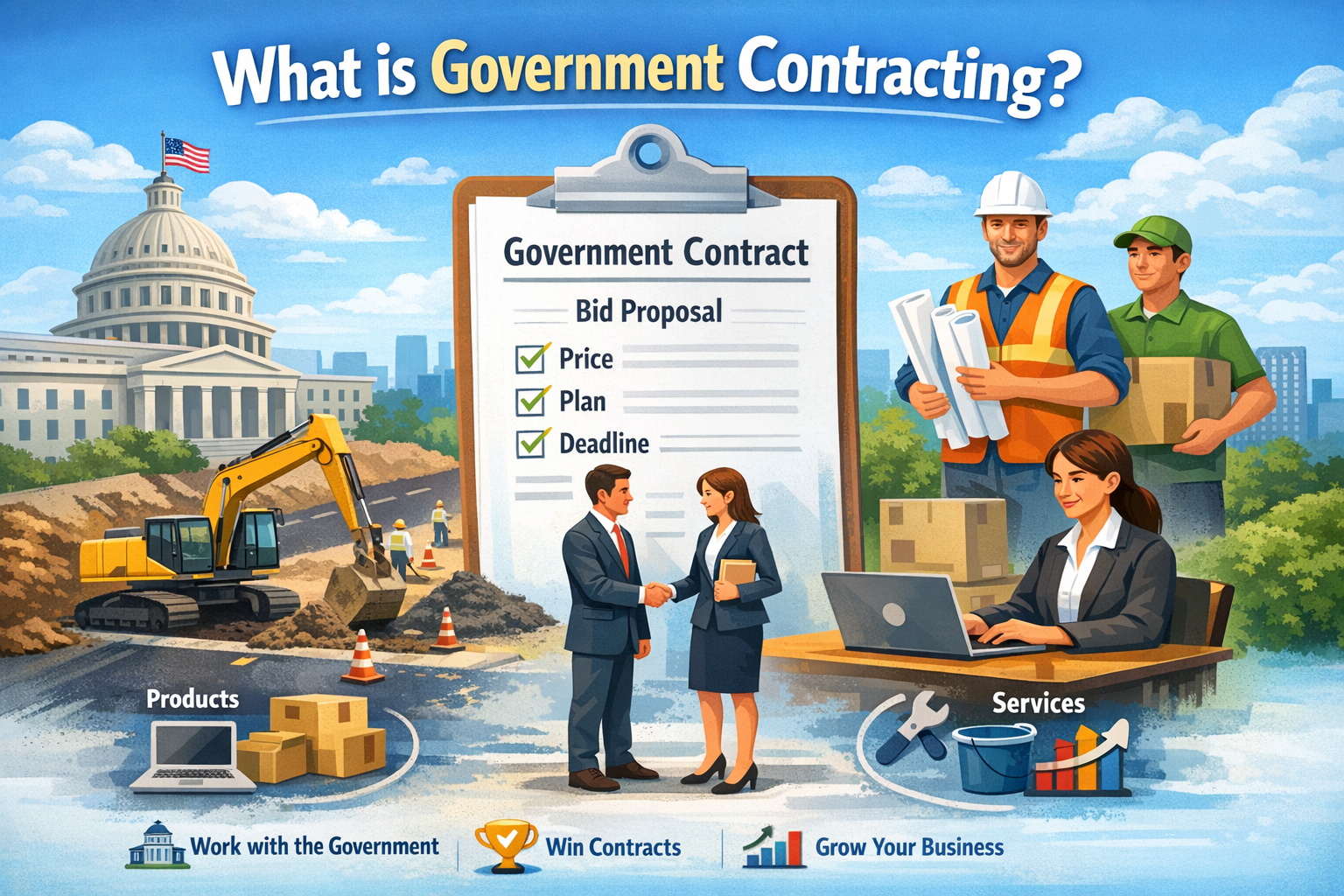
When a company wants to work with the government, it usually needs to send a proposal. A proposal is a document that explains what the company can do, how much it will cost, and why it should be chosen for the job.
But sending a proposal is not just about writing good ideas. It must also follow strict rules. This is called compliance.
Compliance means making sure your proposal follows every instruction given by the government. Even a great proposal can be rejected if it misses one small requirement.
That is why a compliance checklist is so important. It helps you review everything before submitting your proposal.
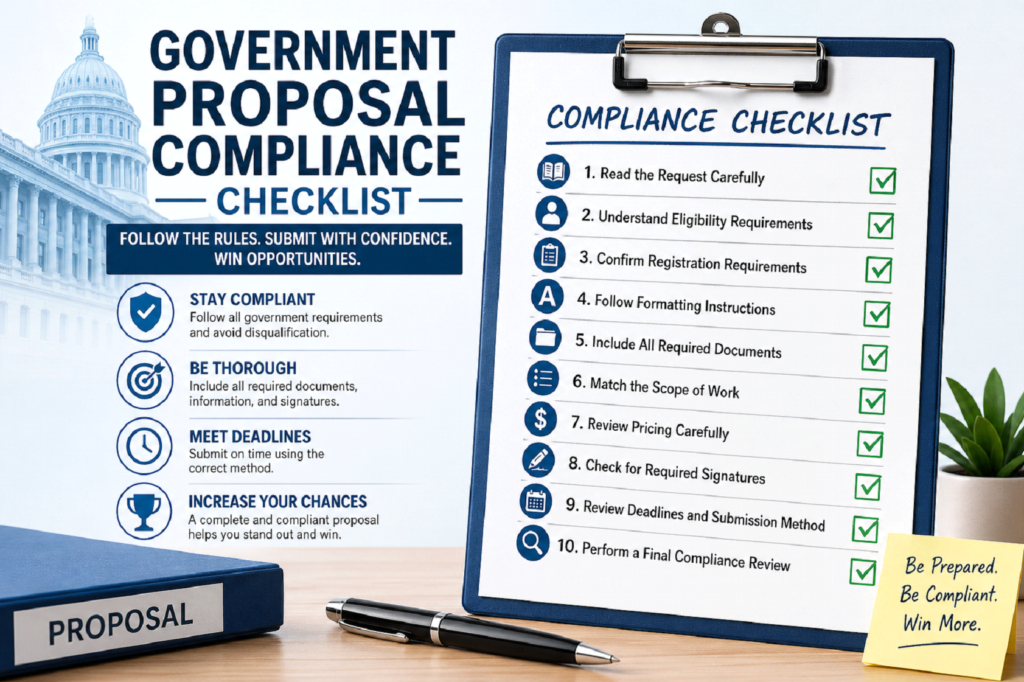
Here is a simple Government Proposal Compliance Checklist that can help.
1. Read the Request Carefully
The first step is to carefully read the Request for Proposal, often called the RFP.
The RFP is the government’s instruction guide. It explains what they need, how they want the proposal written, and when it must be submitted.
Do not skim it. Read every page.
Pay close attention to:
- Submission deadline
- Required documents
- Page limits
- Formatting rules
- Pricing instructions
- Technical requirements
- Evaluation criteria
- Contact details
- Special certifications needed
Missing even one small detail can cause problems later.
2. Understand Eligibility Requirements
Not every company can apply for every government contract.
Some contracts are only for small businesses. Others may require special licenses, security clearances, or past experience in a certain field.
Before spending time on the proposal, make sure your business qualifies.
Check for:
- Business size requirements
- Industry certifications
- Financial stability rules
- Insurance requirements
- Past performance standards
- Government registration requirements
If your company does not meet these rules, the proposal may be rejected immediately.
3. Confirm Registration Requirements
Many governments require vendors to be registered before submitting proposals.
For example, in the United States, businesses often need registration in SAM.gov.
Without proper registration, your proposal may not even be reviewed.
Make sure:
- Registration is active
- Business information is correct
- Tax details are updated
- Banking information is complete
- Required IDs are valid
Always check this early because registration updates can take time.
4. Follow Formatting Instructions
Government proposals often have strict formatting rules. These rules may seem small, but they matter a lot.
The RFP may ask for:
- Specific font size
- Certain margins
- Numbered pages
- Section dividers
- Table of contents
- PDF format only
- File naming rules
If the instructions say 20 pages maximum, do not send 21 pages. Compliance means following directions exactly.
5. Include All Required Documents
Many proposals fail because documents are missing. Create a list of every required attachment before submission.
This may include:
- Cover letter
- Executive summary
- Technical proposal
- Pricing proposal
- Past performance references
- Financial statements
- Certifications
- Insurance proof
- Resumes of key staff
- Signed forms
Check each item one by one. Never assume something is optional unless the RFP clearly says so.
6. Match the Scope of Work
The scope of work explains what the government wants done. Your proposal must clearly show that you understand the job and can complete it.
Avoid vague answers.
Instead, explain:
- What tasks will you complete
- How will you complete them
- Who will do the work
- How long will it take
- What tools or systems will you use
Your response should directly match what the RFP asks for. Think of it like answering test questions. If the question asks for three points, give three clear points.
7. Review Pricing Carefully
Pricing mistakes can cause major problems. Your pricing must be accurate, clear, and easy to understand.
Check:
- Total cost calculations
- Labor rates
- Material costs
- Taxes if required
- Optional services
- Discounts if offered
- Payment terms
Make sure your pricing matches the technical proposal. For example, if you promise five workers in one section, your pricing should include five workers too.
Consistency matters.
8. Check for Required Signatures
Some forms must be signed by an authorized person. Unsigned documents can lead to automatic rejection.
Review:
- Signature pages
- Certification forms
- Pricing approvals
- Legal declarations
- Compliance statements
Digital signatures may be allowed, but always confirm what the RFP accepts.
9. Review Deadlines and Submission Method
Late proposals are usually rejected without review. It does not matter how strong the proposal is.
Know exactly:
- Submission date
- Submission time
- Time zone
- Online portal instructions
- Email submission rules
- Physical delivery address if needed
Submit early when possible. Waiting until the last hour creates unnecessary risk. Internet issues, file upload problems, or email errors can happen.
10. Perform a Final Compliance Review
Before sending, complete one final review. This should be done by someone who did not write the proposal, if possible. Fresh eyes catch mistakes.
Ask:
- Did we answer every requirement?
- Did we include every document?
- Is pricing correct?
- Are all signatures complete?
- Does formatting follow instructions?
- Is registration active?
- Is the proposal easy to read?
- Is the submission ready before the deadline?
A checklist only works if it is actually used.
Why Compliance Matters
Many companies focus only on making the proposal persuasive. That is important, but compliance comes first. Government buyers often review compliance before quality.
If your proposal is non-compliant, it may be rejected before anyone reads your best ideas. That means lost time, lost money, and lost opportunities. A strong compliance process protects your hard work.
Final Thoughts
Government proposal compliance is not complicated, but it requires attention and discipline. Think of it like baking a cake. Even if you use the best ingredients, forgetting one important step can ruin the result.
The same is true for proposals. A compliance checklist helps you stay organized, avoid mistakes, and submit with confidence. It turns a stressful process into a clear step-by-step system. Before every government proposal submission, use this checklist. It can be the difference between rejection and winning the contract.