
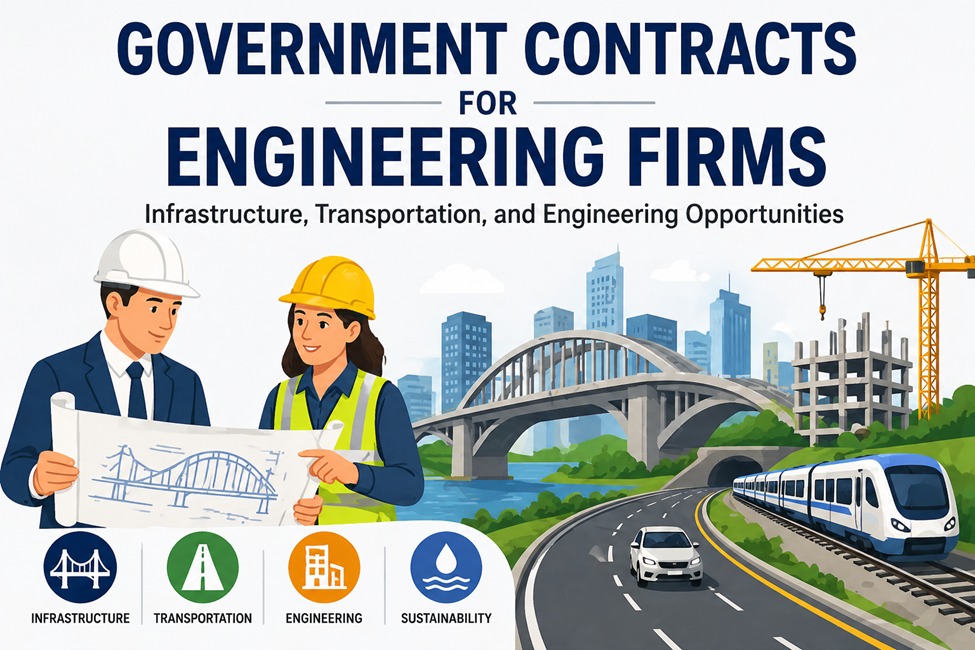
Government contracts for engineering firms are one of the biggest opportunities in the public sector. Governments at the local, state, and national levels constantly invest in roads, bridges, airports, water systems, public buildings, and transportation networks. To complete these important projects, they rely on private engineering firms.
Engineering firms provide the planning, design, testing, and technical expertise needed to build safe and efficient infrastructure. These government contracts help improve cities, support economic growth, and make daily life better for citizens.
For engineering companies, government contracts offer long-term work, stable revenue, and strong business growth. From civil engineering to transportation planning, public agencies need skilled partners who can deliver reliable results.
Why Government Agencies Hire Engineering Firms
Government agencies manage large public projects that require expert knowledge and strict safety standards. They cannot complete these projects without professional engineering support.
That is why engineering firms play such an important role.
Building Public Infrastructure
Infrastructure includes roads, bridges, highways, tunnels, schools, hospitals, dams, and water systems. These projects require engineering design, inspections, and technical planning before construction can begin.
Engineering firms help make sure these projects are safe, efficient, and built to last.
Improving Transportation Systems
Transportation projects are another major area for government contracts. Cities and states need better highways, rail systems, airports, ports, and public transit systems.
Engineering firms help design transportation networks that reduce traffic, improve safety, and support economic development.
Supporting Environmental and Utility Projects
Government agencies also hire engineering companies for water treatment plants, drainage systems, flood control, renewable energy projects, and utility upgrades.
These projects protect communities and improve long-term sustainability.
Common Government Contracts for Engineering Firms
There are many types of government contracts available for engineering firms.
Civil Engineering Contracts
Civil engineering contracts are among the most common. These include road construction planning, bridge design, land development, drainage systems, and structural inspections.
Civil engineers help create the foundation for public infrastructure projects.
Transportation Engineering Contracts
Transportation engineering focuses on roads, highways, railways, airports, and traffic systems. Governments hire firms to improve traffic flow, reduce accidents, and support future transportation needs.
This area continues to grow as cities expand.
Structural Engineering Contracts
Structural engineering contracts involve the design and safety testing of buildings, bridges, towers, and public facilities.
Government agencies need engineers to make sure these structures can handle weather, heavy use, and long-term wear.
Environmental Engineering Contracts
Environmental engineering contracts focus on waste management, clean water systems, pollution control, and sustainability projects.
These contracts are especially important for growing cities and climate-related planning.
Benefits of Government Contracts for Engineering Firms
Winning government contracts can bring major advantages for engineering companies.
Long-Term Revenue and Stability
Government engineering projects often last for months or years. Large infrastructure contracts may continue for a very long time through planning, construction, and maintenance phases.
This gives engineering firms steady income and reliable business growth.
Strong Industry Reputation
Working on public projects improves a firm’s credibility. Government work shows that the company can meet strict standards and manage complex projects.
This can also attract private sector clients.
Repeat Work and Future Projects
Once an engineering firm completes a successful project, agencies often return for future contracts, inspections, upgrades, and expansion work.
Long-term partnerships are common in public sector engineering.
How Government Engineering Contracts Work
Government agencies usually follow a formal purchasing process called procurement.
This process helps ensure fairness and transparency.
Request for Proposal (RFP)
An agency publishes a Request for Proposal, also known as an RFP. This explains the project details, technical needs, deadlines, and application process.
Engineering firms must carefully review the requirements before submitting a bid.
Bid Submission
Companies submit proposals that include pricing, technical plans, project timelines, certifications, and proof of past experience.
Strong proposals must show both technical expertise and the ability to complete the project on schedule.
Compliance and Regulations
Government contracts often include strict legal rules, safety standards, and environmental requirements.
Engineering firms must follow all regulations carefully to qualify and remain compliant.
Challenges of Government Contracts for Engineering Firms
Government contracts can be highly rewarding, but they also come with challenges.
Long Approval Times
Public projects often move slowly because they require approvals, budgeting, and multiple reviews. Companies must be prepared for delayed decisions.
Detailed Documentation
Engineering bids require technical reports, legal forms, insurance details, and compliance documents. This process can be time-consuming.
High Competition
Many engineering firms compete for the same contracts. Strong experience, certifications, and proposal quality are necessary to stand out.
Tips for Winning Government Engineering Contracts
Engineering firms can improve their success by using smart strategies.
Build Strong Past Performance
Government agencies prefer firms with proven experience. Smaller companies can begin by working as subcontractors on larger projects to build their portfolio.
Past performance is one of the most important factors in public contracting.
Maintain Professional Certifications
Licenses, safety certifications, and engineering qualifications are critical. Governments want firms that meet professional standards and legal requirements.
Focus on Relationships and Trust
Reliable communication, strong project management, and consistent performance help build trust with government buyers.
A good reputation often leads to more opportunities.
Why Government Engineering Contracts Matter
Government contracts for engineering firms do more than create business growth. They directly improve communities.
A stronger bridge improves public safety. A better highway reduces travel time. A clean water system protects public health. A well-designed airport supports jobs and economic growth.
Engineering firms help shape the places where people live, work, and travel every day.
Their work creates real, visible impact for the public.
Conclusion
Government contracts for engineering firms are a major opportunity in infrastructure, transportation, and public development. Agencies need expert partners for roads, bridges, utilities, environmental projects, and transportation systems.
These contracts offer stable revenue, stronger credibility, and long-term growth for engineering companies.
Although the bidding process can be competitive and detailed, the rewards are often worth it. Firms that understand public sector needs and deliver safe, reliable engineering solutions can build strong partnerships for years.
For engineering firms looking to grow, government contracts are one of the smartest and most valuable opportunities available today.