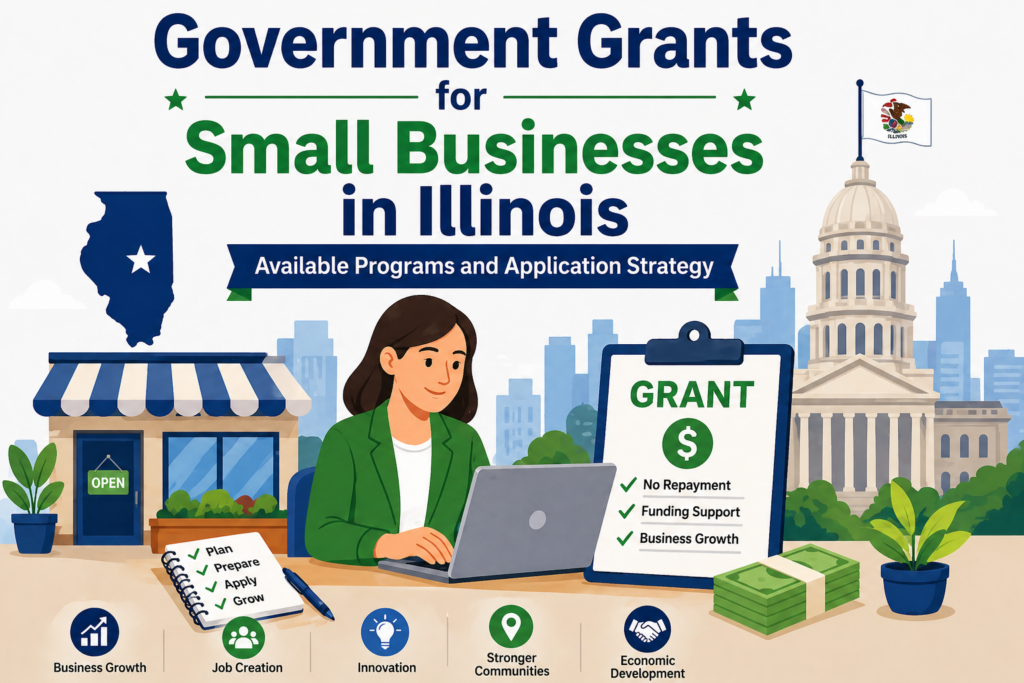
Government grants for small businesses in Illinois can provide valuable financial support for business owners who want to start, expand, or improve their companies. Unlike loans, grants usually do not need to be repaid, which makes them one of the most attractive funding options for small businesses.
Illinois offers many grant opportunities through state agencies, local governments, and federal programs. These grants may help businesses hire employees, purchase equipment, improve technology, expand locations, recover from challenges, and support innovation.
For small business owners, understanding Illinois small business grants can create new opportunities for growth. Knowing which programs are available and how to apply correctly can make a major difference.
Why Small Businesses in Illinois Seek Government Grants
Running a business requires money for payroll, marketing, inventory, equipment, rent, and daily operations. Many owners prefer funding options that do not create heavy debt.
That is why government grants are so valuable.
Supporting Business Growth
Grants can help businesses grow faster by funding expansion projects, hiring workers, improving operations, or opening new locations.
This allows owners to invest without taking on large loans.
Strengthening Local Economies
Illinois uses grant programs to support local businesses, create jobs, and improve communities. When small businesses succeed, cities and neighborhoods grow stronger.
Helping Underserved Business Owners
Some grants are created for women-owned businesses, minority-owned businesses, veteran-owned businesses, and businesses in underserved communities.
These programs help create equal access to business opportunities.
Common Government Grant Programs for Small Businesses in Illinois
There are several major grant opportunities available across Illinois.
Illinois Department of Commerce and Economic Opportunity (DCEO)
The Illinois Department of Commerce and Economic Opportunity is one of the main sources for small business funding. It supports business development, workforce training, community projects, and economic recovery programs.
Many Illinois grant programs begin through DCEO initiatives.
Illinois Small Business Development Centers (SBDC)
Illinois SBDCs help business owners find grants, prepare applications, and improve funding strategies. While they may not directly provide grants, they are a valuable support system for accessing funding opportunities.
They also help with business planning and financial preparation.
Small Business Administration (SBA) Support Programs
The SBA does not usually provide direct startup grants, but it helps connect businesses to federal funding, disaster relief support, and special grant programs.
SBA resource partners can help Illinois business owners understand available options.
USDA Rural Development Grants
Businesses located in rural Illinois may qualify for USDA Rural Development grants. These programs support equipment purchases, renewable energy improvements, and business expansion.
These grants are especially useful for agricultural and manufacturing businesses.
Local Grant Opportunities in Illinois
Many cities and counties also offer small business grants throughout the year.
Chicago Small Business Grant Programs
Chicago often offers grants for storefront improvements, neighborhood revitalization, small business recovery, and minority-owned business support.
These programs can change depending on city budgets and economic priorities.
Community Development Programs
Cities like Springfield, Rockford, Peoria, and Aurora may offer grants for local business growth, job creation, and downtown development.
Checking with local government offices is important.
Chambers of Commerce and Economic Partnerships
Local chambers of commerce and economic development organizations often provide information about grants and funding support.
They can also guide business owners to the right application resources.
Who Can Apply for Small Business Grants in Illinois
Each grant program has its own rules, but most require businesses to meet basic qualifications.
Legally Registered Businesses
Most grants require businesses to be properly registered in Illinois with the correct licenses, tax records, and legal documentation.
Industry or Location Requirements
Some grants focus on industries like manufacturing, healthcare, agriculture, technology, or retail. Others only support businesses in specific cities or rural communities.
Community and Job Impact
Many grant programs want to know how the business will help the local economy by creating jobs, improving neighborhoods, or supporting long-term growth.
How to Apply for Government Grants in Illinois
Applying for a grant takes preparation and attention to detail.
Research the Right Grant Programs
Start by finding grants that match your business goals, industry, and location. Focus on programs that clearly fit your needs instead of applying randomly.
Official government websites are the best place to begin.
Prepare Business Documents
Most applications require documents like business licenses, financial statements, tax returns, ownership records, and a business plan.
Keeping these documents organized saves time.
Write a Strong Grant Proposal
Many grants require a written explanation of how the funding will be used. This proposal should clearly explain your business goals, expected results, and how the grant will benefit both the company and the community.
Clear and simple writing is often the most effective.
Follow Every Application Rule
Missing deadlines or forgetting documents can lead to rejection. Carefully review all instructions before submitting your application.
Challenges of Applying for Small Business Grants
Government grants are helpful, but they can be competitive.
Limited Funding Availability
Many programs have a small budget and receive many applications. Not every qualified business will receive funding.
Strict Eligibility Requirements
Some grants have detailed rules about location, business size, industry, or ownership type. Businesses must carefully check if they qualify.
Long Review Times
Approval may take weeks or months, depending on the program. Business owners should plan ahead and remain patient.
Smart Application Strategy for Better Results
Businesses can improve their chances of success by following a strong application strategy.
Apply for Multiple Grants
Do not depend on just one opportunity. Applying for several matching grants increases the chance of receiving funding.
Keep Financial Records Strong
Clean financial records make a business look professional and trustworthy during the review process.
Use Expert Guidance
SBDCs, SBA advisors, and local grant specialists can help review applications and improve proposals.
Professional advice often improves results.
Why Illinois Small Business Grants Matter
Government grants do more than help one business owner. They improve entire communities.
A family-owned shop can expand and hire more workers. A startup can launch a new product. A rural manufacturer can buy better equipment. A minority-owned business can grow faster and create local jobs.
These grants support long-term economic development across Illinois.
Conclusion
Government grants for small businesses in Illinois are powerful tools for growth. They help owners expand operations, hire employees, improve technology, and strengthen communities without creating heavy debt.
From DCEO programs to USDA rural grants and local city funding opportunities, Illinois offers many paths to financial support.
Although applying requires time and preparation, the rewards can be significant. Business owners who research carefully, prepare strong applications, and stay organized can greatly improve their chances of success.
For Illinois entrepreneurs looking for smart funding options, government grants can be one of the best ways to build a stronger and more successful business.