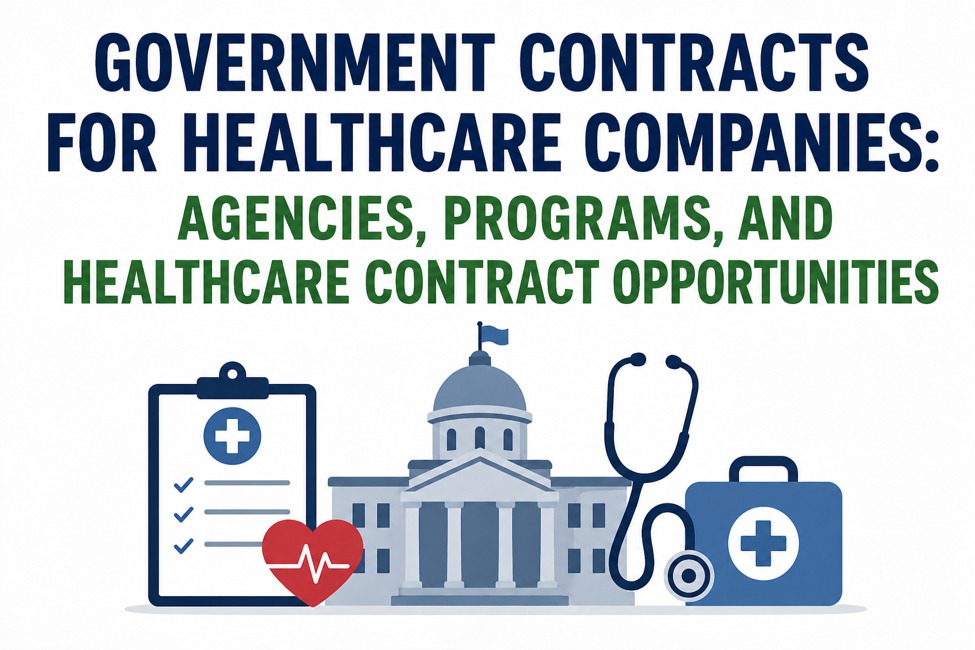
Government contracts for healthcare companies create strong opportunities for steady revenue, long-term partnerships, and business growth. Government agencies constantly need healthcare services, medical supplies, staffing support, consulting, and operational solutions to serve communities and maintain public health systems. From hospitals and clinics to emergency response programs and veteran care services, healthcare companies play a major role in supporting government operations.
Many healthcare businesses believe government contracts are only for large hospital groups or major medical suppliers. In reality, small and mid-sized healthcare companies can also win valuable contracts if they understand where the opportunities are and how to position themselves correctly.
The key is knowing which agencies need healthcare support and building trust through compliance, quality service, and reliable delivery.
Why Government Agencies Hire Healthcare Companies
Government agencies manage large healthcare systems and public health programs. They often need outside providers to help deliver medical care, equipment, services, and specialized expertise.
Instead of handling every service internally, agencies work with private healthcare companies for medical staffing, laboratory services, home healthcare support, consulting, equipment supply, patient care services, and emergency healthcare response.
Healthcare contractors help improve patient outcomes, support operational efficiency, and strengthen public health services. This creates strong opportunities across many healthcare specialties.
Common Healthcare Services Government Agencies Need
Government healthcare contracts cover many different services. These include medical staffing, nursing services, home healthcare support, telehealth services, medical equipment supply, laboratory services, pharmaceutical support, healthcare consulting, hospital cleaning and sanitation, medical transportation, rehabilitation services, behavioral health support, and public health program management.
If your company offers these services, government contracting can become a strong source of stable and long-term business.
Best Government Agencies for Healthcare Contracts
Some government agencies regularly outsource healthcare services. Knowing where to focus improves your chances of success.
Department of Veterans Affairs (VA)
The VA is one of the largest buyers of healthcare services in the government sector. It regularly contracts for hospitals, clinics, home healthcare, medical staffing, and patient support services. Healthcare companies with strong compliance systems often find major opportunities here. VA contracts can also lead to long-term repeat work.
Department of Health and Human Services (HHS)
HHS manages public health programs, healthcare policy, emergency preparedness, and community health initiatives.
It often hires contractors for consulting, staffing, laboratory support, program management, and healthcare operations. Companies with public health or compliance experience perform well here.
Centers for Medicare and Medicaid Services (CMS)
CMS works with healthcare providers and consultants for healthcare administration, compliance reviews, billing systems, and quality improvement programs. Healthcare consulting firms and operational support providers often find valuable contracts here.
Department of Defense (DoD)
Military healthcare systems require medical staffing, hospital operations, emergency care, rehabilitation services, and medical logistics support. Companies with strong reporting systems and strict compliance processes can perform well in defense healthcare contracts.
State and Local Health Departments
Cities, counties, and state health agencies regularly need staffing support, vaccination programs, community health services, and emergency healthcare operations.
These local contracts are often the best starting point for smaller healthcare businesses entering government work.
How to Find Government Healthcare Contract Opportunities
Finding the right contracts requires consistent monitoring and strong networking. Government agencies publish healthcare opportunities through procurement websites, vendor portals, public purchasing systems, and agency bid platforms. Healthcare companies should review these regularly and track recurring contracts because many healthcare agreements renew on a schedule. Vendor outreach events, supplier meetings, and healthcare procurement conferences are also very valuable.
Relationships often create better opportunities than cold bidding alone.
Start With Local and State Opportunities
Many smaller healthcare companies try to target large federal contracts too early.
A better strategy is often starting with local hospitals, public clinics, school health programs, and city health departments. These projects help build past performance, stronger references, and a trusted public sector reputation.
Winning smaller contracts first creates stronger long-term growth.
How to Win Government Healthcare Contracts
Winning healthcare contracts requires more than offering medical services. Agencies want dependable partners they can trust with patient care and public health.
Build a Strong Capability Statement
Your capability statement should explain your services, licenses, certifications, insurance coverage, compliance systems, and past healthcare contract experience.
Include measurable proof whenever possible. For example, show patient satisfaction rates, staffing response speed, compliance performance, or successful management of healthcare programs. Government buyers want confidence, not general promises.
Focus on Licensing and Compliance
Healthcare contracting depends heavily on legal and regulatory compliance. Your company must have proper licenses, certifications, insurance coverage, privacy protection systems, and staff credential verification. For federal healthcare work, standards may be even stricter.
Prioritize Quality of Care and Reliability
Government agencies care deeply about service consistency. Delayed staffing, poor documentation, and weak patient care standards can quickly damage trust. Your company should show strong quality control systems, clear supervision, and reliable service delivery. Consistency is often the biggest deciding factor.
Build Relationships With Prime Contractors
Large healthcare contractors often subcontract specialized services to smaller healthcare companies. Working under a prime contractor helps smaller firms gain experience, stronger references, and access to larger projects. Subcontracting is often the fastest path into federal healthcare work.
Submit Clear and Practical Proposals
Government buyers are not looking for sales language. They want clear service plans. Your proposal should explain staffing models, patient care processes, reporting systems, emergency support, compliance methods, and pricing.
Simple, practical proposals often perform better than complicated presentations. Trust and structure win contracts.
Final Thoughts
Government contracts for healthcare companies offer strong opportunities for stable growth and long-term partnerships. Hospitals, veteran services, military healthcare systems, public health departments, and local clinics all need trusted healthcare support.
The best strategy starts with targeting the right agencies, building strong compliance systems, creating professional proposals, and proving reliable service delivery. Small and mid-sized healthcare companies can absolutely compete by focusing on trust, consistency, and strong patient care standards.
Government agencies are not simply hiring vendors. They are choosing partners who help protect lives, improve care, and support public health every day. For healthcare companies ready to operate with professionalism and discipline, government contracting can become one of the most valuable and dependable growth channels available.