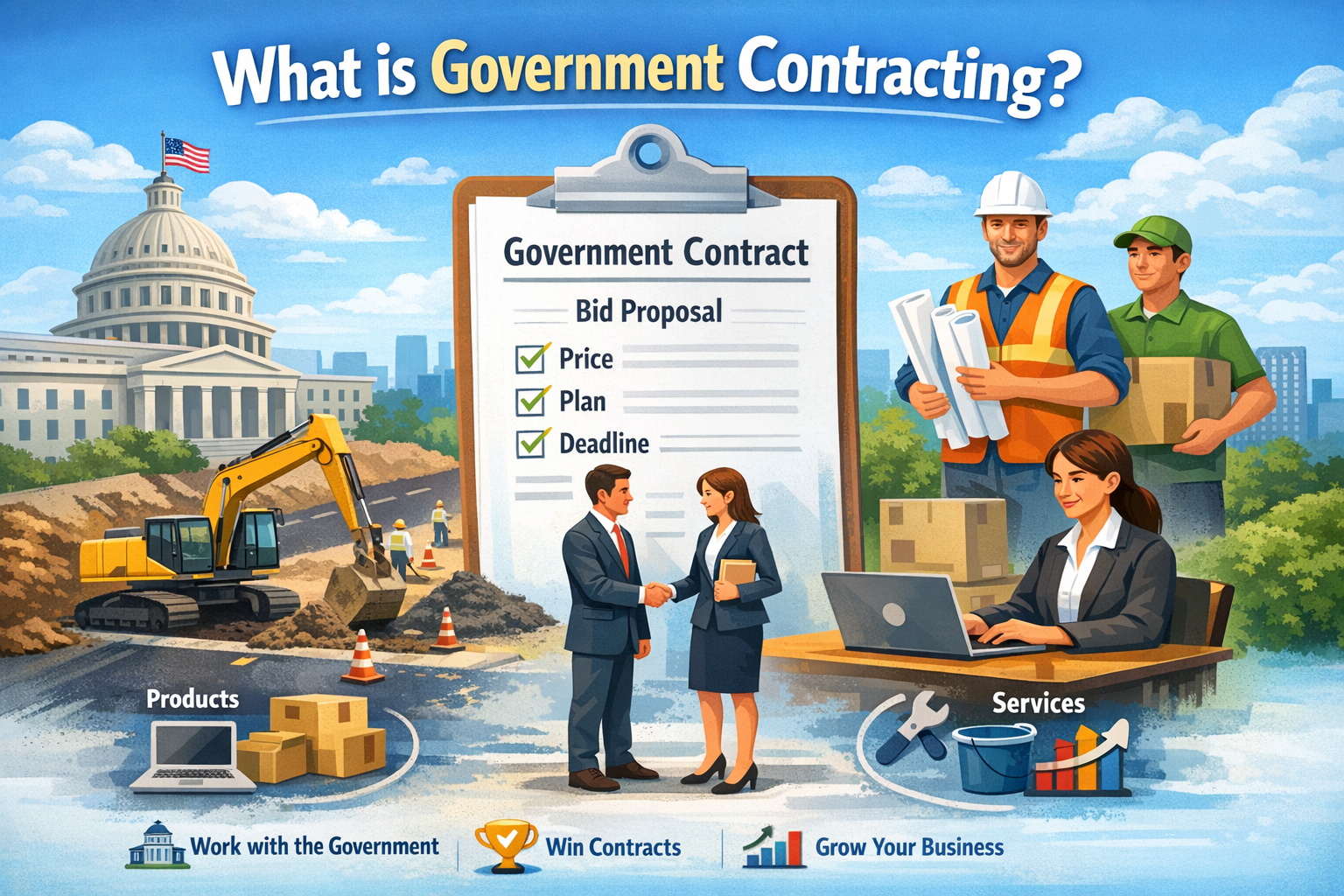
Government contracts for construction companies can provide steady work, large project opportunities, and long-term business growth. Federal, state, and local government agencies regularly need contractors for roads, schools, hospitals, bridges, military facilities, office buildings, and public infrastructure projects. For many construction companies, government contracts can become one of the most reliable sources of revenue.
Many business owners believe government construction contracts are only for very large firms, but small and mid-sized construction companies can also win valuable projects. The key is understanding where the opportunities are, which agencies to target, and how to build a strong bidding strategy.
Success in government contracting comes from preparation, trust, and the ability to deliver quality work on time.
Why Government Agencies Need Construction Companies
Government agencies are responsible for maintaining and improving public infrastructure. Roads must be repaired, schools need upgrades, hospitals require expansion, and public buildings must stay safe and functional.
Most agencies do not complete this work themselves. They hire private construction companies to handle planning, building, repairs, and maintenance. This creates constant opportunities for contractors in many specialties.
From general contractors to electricians, plumbers, roofing companies, paving specialists, and heavy equipment providers, many businesses can find opportunities in government work.
Common Construction Projects in Government Contracting
Government construction contracts cover many different project types.
These include:
- Road construction and highway repairs
- Bridge repairs and infrastructure upgrades
- School construction and renovations
- Government office building projects
- Military base construction
- Hospital and healthcare facility improvements
- Water and sewer system projects
- Airport improvements
- Public housing projects
- Parks and recreation facility development
- Emergency repair and disaster recovery work
If your company works in these areas, government contracts can create major growth opportunities.
Best Government Agencies for Construction Contracts
Some agencies consistently offer strong construction opportunities. Knowing where to focus helps save time and improve results.
Department of Transportation (DOT)
Transportation departments are among the largest buyers of construction services. They manage highways, bridges, road repairs, traffic systems, and public transportation infrastructure. Roadwork and heavy civil contractors often find strong opportunities here. These projects are often large and long-term.
Department of Defense (DoD)
Military bases require construction, maintenance, facility upgrades, and infrastructure support. The Department of Defense regularly hires contractors for secure facilities, housing, training centers, and operational buildings. Companies with strong compliance systems often perform well in defense-related projects.
General Services Administration (GSA)
GSA manages many federal buildings and public facilities. This includes office spaces, courthouses, and government service centers. Renovation, maintenance, and building improvement contracts are common here.
State and Local Governments
Cities, counties, and state governments offer many construction opportunities for schools, parks, roads, public safety buildings, and water systems.
These contracts are often easier for smaller businesses to enter and can help build strong past performance. Local success often creates the path to larger federal contracts.
Housing and Urban Development Agencies
Housing agencies manage public housing projects, renovations, and community development programs. Contractors involved in residential construction and community infrastructure can find valuable opportunities here.
How to Find Government Construction Projects
Finding the right projects requires consistent monitoring and relationship-building.
Government agencies publish bid opportunities through procurement websites, public notices, city websites, and contractor portals. Construction companies should create a system for reviewing active bids and tracking deadlines.
Vendor outreach events, contractor meetings, and pre-bid conferences are also very important. These events help businesses understand project details and connect with decision-makers.
Start With Smaller Local Projects
Many companies make the mistake of only chasing large federal contracts.
Smaller local projects such as school repairs, city maintenance work, and municipal upgrades are often better starting points. They help build past performance, references, and experience with public contracting.
Winning smaller contracts first often creates stronger long-term success.
Winning Bidding Strategies for Construction Companies
Finding opportunities is only the beginning. Winning requires strong preparation and discipline.
Build a Strong Capability Statement
A capability statement should clearly explain your construction services, licenses, certifications, equipment, safety record, and past project experience. Government buyers want to know if you can handle the project safely, legally, and efficiently.
Include measurable results and project examples whenever possible. Proof builds trust faster than promises.
Focus on Safety and Compliance
Construction projects involve strict safety standards, labor laws, and environmental regulations. A strong safety record is a major advantage. Agencies want contractors who reduce risk and protect workers, public spaces, and project timelines. Compliance is not optional. It is often one of the biggest decision factors.
Understand Bonding and Insurance Requirements
Many government construction projects require performance bonds, payment bonds, and strong insurance coverage. Companies must be financially prepared for these requirements before bidding. Knowing this early prevents wasted time and missed opportunities.
Partner With Larger Prime Contractors
Small construction companies can grow by working as subcontractors under larger prime contractors. This creates access to bigger projects, stronger references, and valuable experience. It also helps businesses learn how larger government projects operate. Subcontracting is often the smartest first step into federal construction work.
Submit Clear and Competitive Bids
Government buyers want realistic pricing, clear timelines, and strong project planning. Low pricing alone does not guarantee success. Agencies also evaluate reliability, safety, experience, and risk management. Your bid should show that your company can complete the work properly, not just cheaply. Professional proposals win more contracts.
Common Mistakes to Avoid
Many construction companies lose opportunities because they focus only on price and ignore preparation.
Poor documentation, missing licenses, weak financial planning, incomplete proposals, and failure to attend pre-bid meetings can damage strong opportunities.
Another common mistake is underestimating compliance requirements. Government construction work involves much stricter reporting and legal responsibilities than many private projects.
Preparation matters as much as technical skill.
Final Thoughts
Government contracts for construction companies offer powerful opportunities for growth, stability, and long-term success. Roads, schools, military facilities, healthcare buildings, and public infrastructure all require trusted construction partners.
The best strategy starts with targeting the right agencies, building strong past performance, understanding compliance, and creating professional bids. Small and mid-sized contractors can absolutely compete by focusing on reliability, safety, and strong execution.
Government agencies are looking for contractors they can trust to complete important public projects the right way. Construction companies that prepare well, bid smartly, and deliver consistent quality can turn government contracting into one of the strongest parts of their business for years to come.