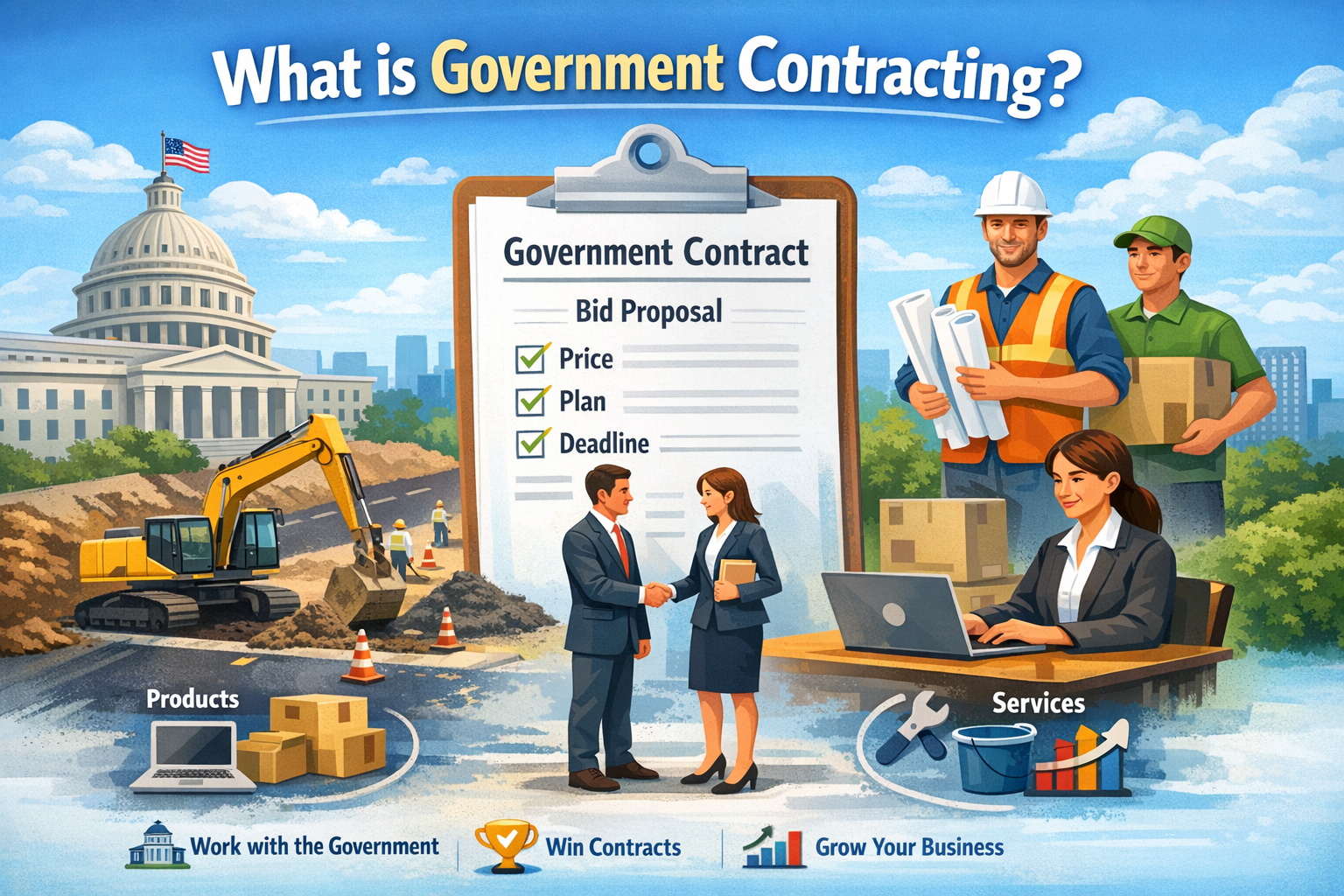
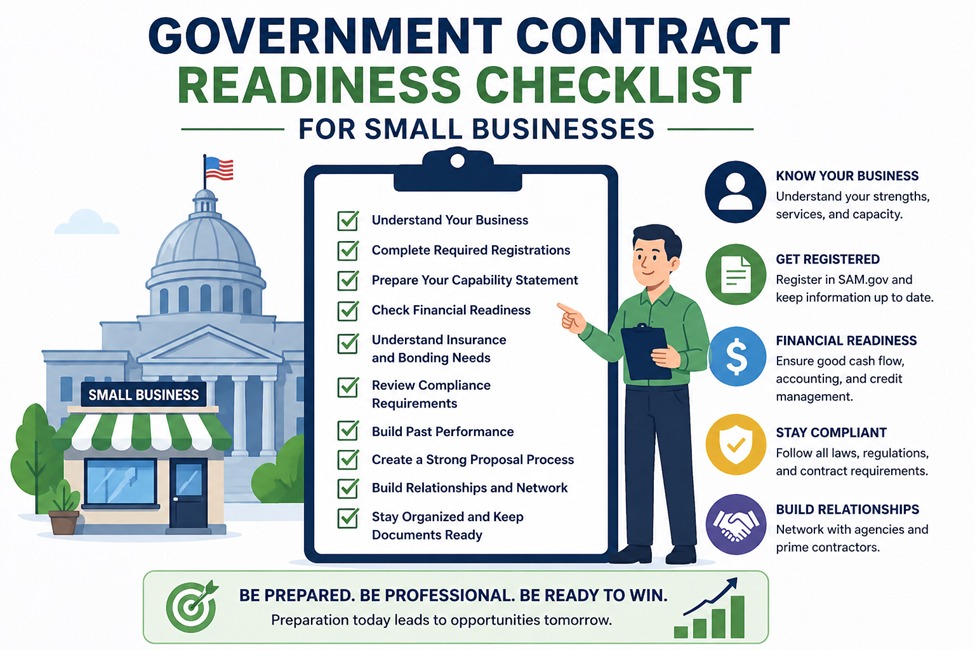
Winning government contracts can help small businesses grow faster, build strong credibility, and create long-term opportunities. Government agencies buy everything from office supplies and technology services to construction work and consulting support. Many small businesses want to enter this space, but many are not fully prepared when the opportunity arrives.
Government contracting is not only about submitting a bid. It requires planning, registration, compliance, financial readiness, and a strong business foundation. If your business is not ready, even a great opportunity can be lost.
That is why having a government contract readiness checklist is so important. It helps small businesses understand what they need before they start bidding and shows where improvements are needed.
Understand Your Business Position
Before looking for contracts, the first step is understanding if your business is truly ready to serve government agencies.
Ask yourself simple but important questions. Do you have enough staff to handle larger projects? Can you meet strict deadlines? Is your financial system strong enough to manage delayed payments? Do you have the experience to deliver consistent quality?
Government agencies want dependable partners. Being honest about your current strengths and weaknesses helps you prepare better.
Know Your Core Services
Many small businesses try to bid on too many different types of work. This creates confusion and weak proposals.
Instead, clearly define your core services. Focus on what your business does best and where you can offer strong value. Government buyers are looking for experts, not general promises.
A clear service focus makes your business easier to trust.
Complete Required Registrations
One of the most important parts of government contract readiness is proper registration.
Your business must be listed in the required government systems before you can compete for many contracts. Missing or outdated registration details can stop you from being considered.
Make sure your legal business name, address, tax information, certifications, and contact details are correct and current.
Registration may seem simple, but it is often where many businesses fail before they even begin.
Prepare Your Capability Statement
A capability statement is like a professional business resume for government contracting. It should clearly explain who you are, what services you offer, your experience, certifications, key clients, and why your business is different from competitors.
Keep it simple, clear, and professional. Government buyers often review capability statements quickly, so strong first impressions matter. This document is one of your most powerful marketing tools.
Check Financial Readiness
Government contracts can be profitable, but they often require strong financial discipline. Some contracts involve delayed payments, upfront expenses, insurance requirements, or performance guarantees. Your business needs enough cash flow to handle these situations.
Review your accounting systems, invoicing process, tax records, and financial reporting. Weak financial management can create major problems during contract performance.
Understand Insurance and Bonding Needs
Some government contracts require special insurance coverage or bonding. For example, construction contracts may require performance bonds, while service contracts may require professional liability insurance. Knowing these requirements early helps you avoid surprises later. Preparation protects both your business and your client.
Review Compliance Requirements
Government agencies follow strict laws and regulations. Small businesses must be ready to meet these standards.
This includes labor laws, cybersecurity standards, contract reporting, workplace safety rules, and procurement ethics.
Failing to follow compliance requirements can lead to lost contracts, penalties, or damaged reputation.
Understanding the rules before bidding is much safer than learning them after winning.
Keep Documentation Organized
Good recordkeeping is essential. Contracts, certifications, licenses, tax records, employee information, invoices, and project reports should all be organized and easy to access.
Government work often requires detailed documentation, and fast access saves time and reduces stress. Professional organization creates confidence.
Build Past Performance
Past performance is one of the biggest decision factors in government contracting. Agencies want proof that you can deliver results. If you are new to government work, start with smaller projects, subcontracting opportunities, or local government contracts. Even strong private sector projects can help show your reliability.
Every completed project adds to your reputation.
Collect References and Testimonials
Satisfied clients can strengthen your credibility. Collect references, testimonials, and project examples that show quality work, on-time delivery, and professional service. These help buyers feel more confident in choosing your business.
Trust grows faster when others can confirm your results.
Create a Strong Proposal Process
Winning contracts depends heavily on your ability to submit clear and complete proposals.Do you have a system for reviewing opportunities, gathering required documents, preparing pricing, and meeting deadlines?
Many small businesses lose contracts not because they lack skill, but because their proposal process is weak. Building a repeatable system saves time and improves results.
Learn How to Read Solicitations
Government contract opportunities come with detailed instructions called solicitations. These documents explain exactly what the agency needs, how proposals must be submitted, and how decisions will be made.
Reading them carefully is critical. Missing one requirement can lead to immediate rejection.
Success often depends on details.
Build Relationships Before You Need Them
Strong relationships with government agencies help create better opportunities. Attend vendor outreach events, public meetings, and industry conferences. Learn what agencies need before contracts are released.
Do not wait until bidding starts to introduce yourself. Relationship-building creates trust, and trust supports long-term success.
Network With Prime Contractors
Large government contractors often need small business partners. Building relationships with prime contractors can create subcontracting opportunities, valuable experience, and future partnerships.
Sometimes your first government contract starts by helping someone else deliver theirs.
Final Thoughts
A government contract readiness checklist for small businesses is not just about paperwork. It is about building a business that is prepared, reliable, and ready for serious growth.
Registration, financial readiness, compliance, strong proposals, past performance, and relationship-building all matter. Small businesses that prepare early have a much better chance of winning and keeping valuable government contracts.
Government contracting rewards professionalism and preparation. The goal is not just to bid for contracts. The goal is to be truly ready when the right opportunity arrives. When preparation meets opportunity, small businesses can compete, grow, and succeed in the government marketplace.